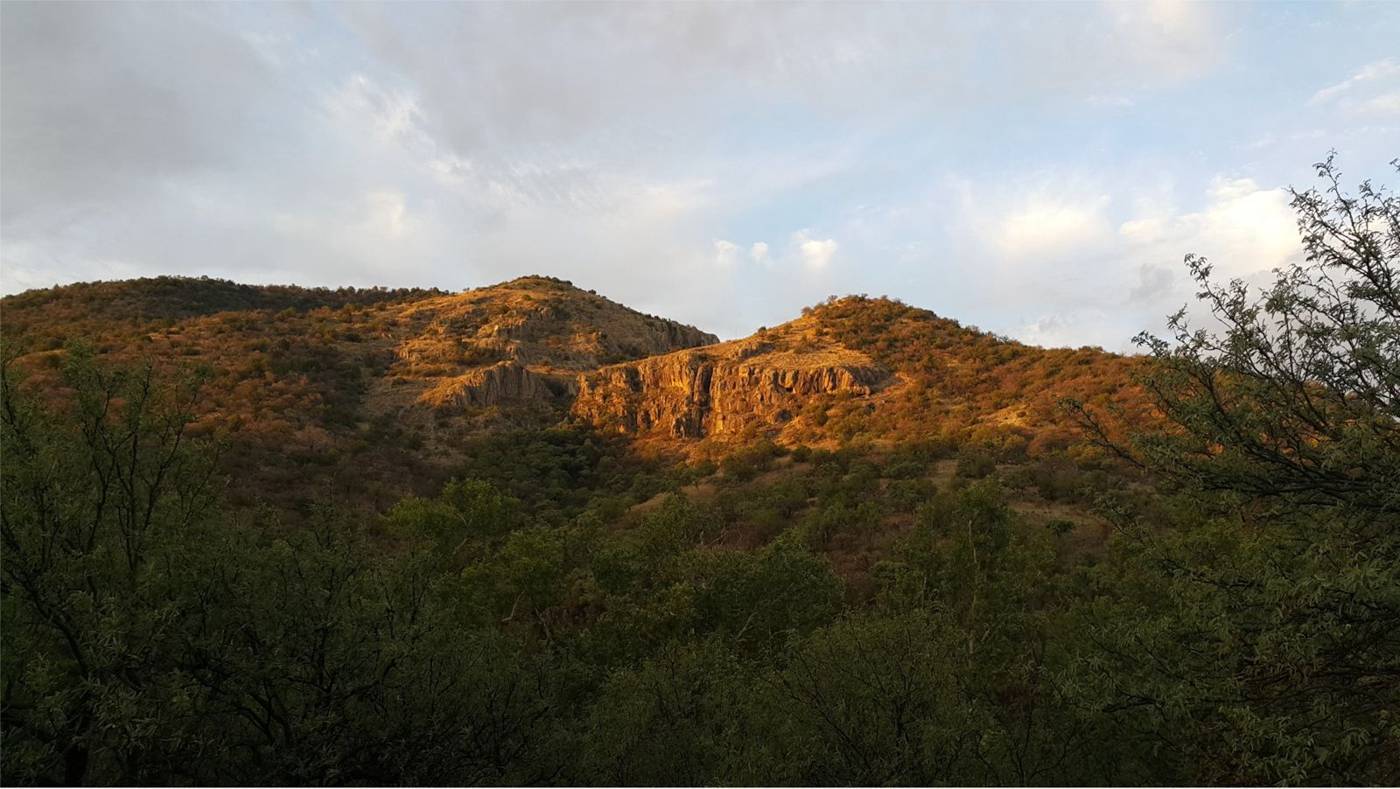
Selene deposit
The southern deposit. This is where the sample came from that an industrial buyer validated through laboratory testing in China for cat litter manufacturing.
- Location
- South of the Babidanchi arroyo
- Status
- Sampled and analysed
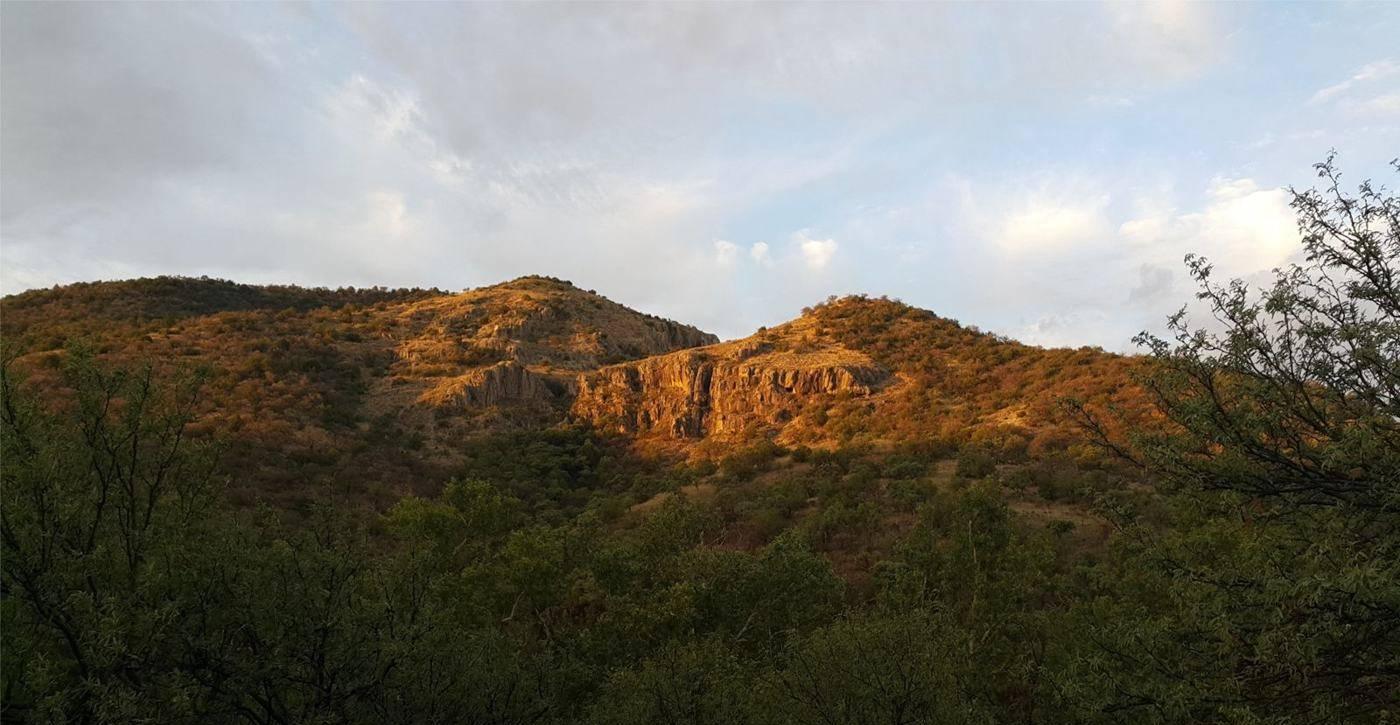
Huachinera, Sonora · Mexico
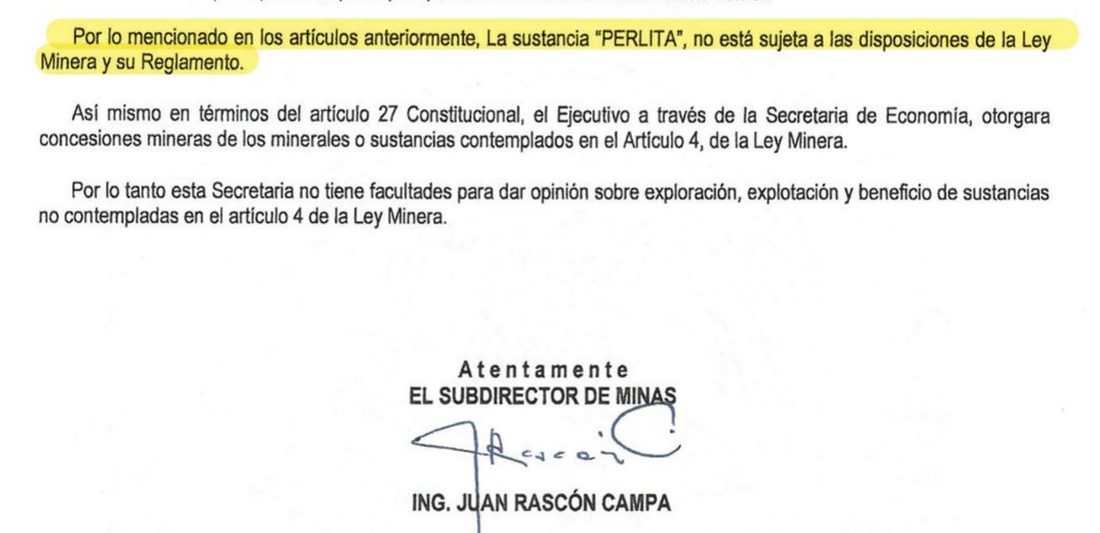
Rancho Babidanchi holds two high-quality perlite deposits on land owned by a single family. Perlite is not a concessible mineral under Mexican law: there is no mining concession in the way, and no third party holds rights over the material.
The resource
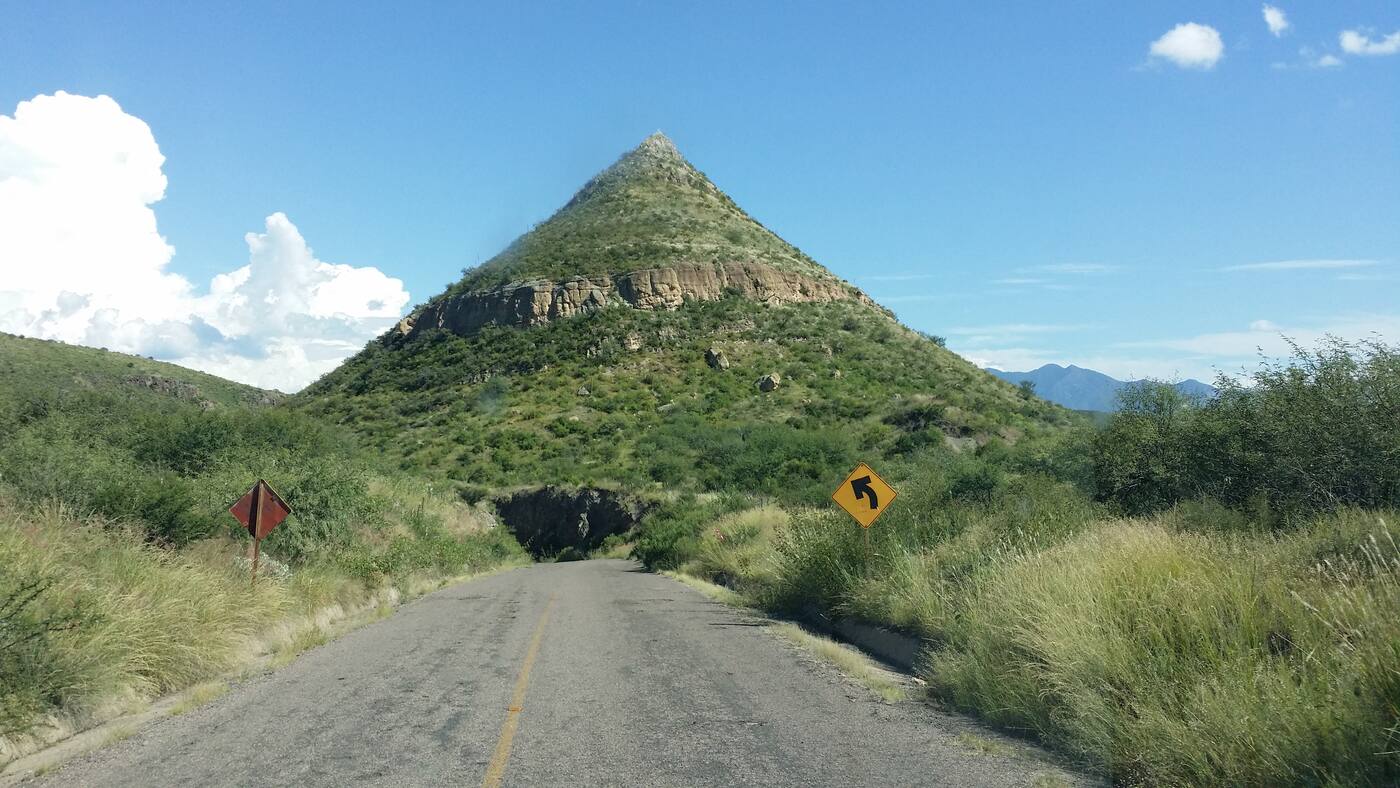
Geological studies conclude that both deposits formed in a single volcanic event, from two separate emission points. They sit on the same ranch, divided by the Babidanchi arroyo, and the evidence points to a single perlitic dome with several surface outlets — meaning they may well be connected in the subsurface.
The southern deposit. This is where the sample came from that an industrial buyer validated through laboratory testing in China for cat litter manufacturing.
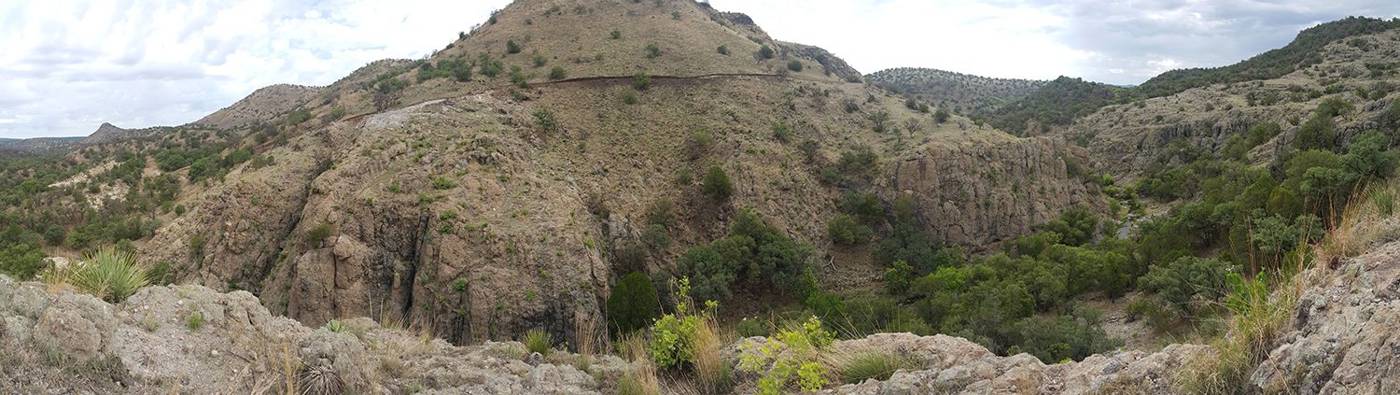
The northern deposit. It has been drilled across 3.5 hectares on the left bank of the arroyo, in addition to surface geological mapping of the surrounding area.
In 2016, eleven samples from both deposits were expanded at the New Mexico Bureau of Geology & Mineral Resources laboratory, recreating industrial furnace conditions at 704 °C with no preheating. These are the results published in the geological reconnaissance report:
| Parameter | Babidanchi result | What it means |
|---|---|---|
| Apparent expansion index | 20 – 43 × | Ratio of crude ore density to expanded density, on the −50 +100 fraction |
| Expanded density | 1.34 – 2.79 lb/ft³ | Between 21 and 45 kg/m³. A very light product |
| Furnace yield | 84 – 93 % | Share of the material that expands correctly |
| Sinks (unexpanded) | from 0.67 % | Material that does not expand. A low figure indicates purity |
| Loss on ignition (LOI) | 4 – 6 % | Volatile content. Lower LOI, higher expansion |
Sample PB16-29B, from the La Bendición deposit, recorded high brightness, an expanded density of 1.34 lb/ft³ and only 0.67 % sinks: better results than the Socorro perlite the laboratory itself uses as its reference standard.
Vidal Solano, J.R. and Hinojosa García, H.J. (2016). Geological reconnaissance and preliminary economic evaluation report, Tables 3 and 4. Testing: New Mexico Bureau of Geology & Mineral Resources.
The high expansion relates to the near-total absence of phenocrysts in the rock and to the low volatile content. For reference, public sources place commercial perlite expansion between 4 and 20 times its volume: the U.S. Department of Agriculture technical report (USDA, 2024) states "up to 20 times". The Babidanchi index runs higher because it is measured on the fine fraction and against crude ore density, and because the perlite expanded to a very low density — 21–45 kg/m³, typical of cryogenic grade rather than the horticultural grade that range is usually calculated against.
The minimum reserves of 5.2 million tonnes are the sum of two independent studies. Consultoría Geológica GV confirmed 1,244,784.82 m³ of proven reserves through detailed mapping, five boreholes and topographic survey across 3.5 hectares of the northern deposit; at an in-situ density of 2.3 t/m³ that equals 2,863,005 t. Vidal Solano and Hinojosa García estimated a further 2,337,628 t at surface, over separate ground.
The figure is conservative on two counts: it excludes the 926,398.63 m³ of probable reserves reported in the same Consultoría Geológica GV study — a further 2.1 million tonnes — and it excludes everything in the deep volume of the dome.
The 80.7 million tonnes of geological resources come from the thesis by Almazán Holguín and Trelles Monge (1986), which estimated the volume of the complete dome. It is an estimate, not a certified reserve.
No resource report under NI 43-101 or JORC exists yet. Producing that report is part of what is contemplated with the partner or buyer who joins the project.
How the 5.2 Mt add up
In-situ density of 2.3 t/m³ throughout. The geological resource is a 1986 estimate of the complete dome volume, not a certified reserve.
The mineral
A volcanic glass that, when heated, turns into a white, porous and extraordinarily light material. If you are new to the mineral, start here.
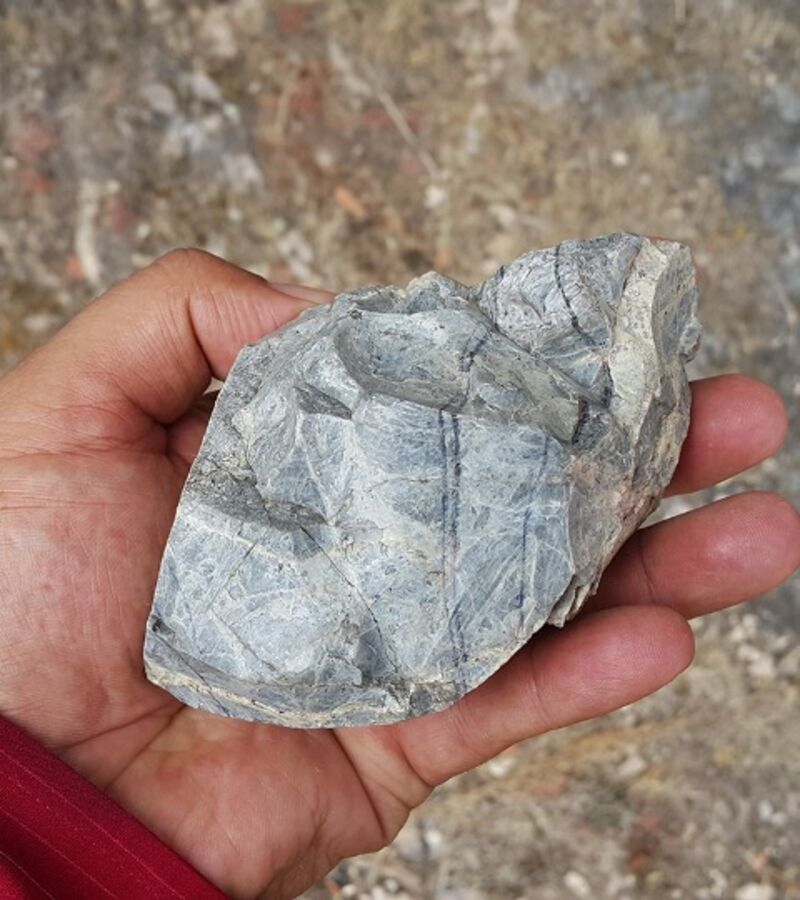
Perlite belongs to the family of amorphous siliceous glasses. It forms when silica-rich lava cools rapidly, trapping small amounts of water inside its vitreous structure. The name comes from its appearance: unexpanded particles often show concentric fractures that resemble pearls.
Crude perlite holds between 2 % and 5 % water. Heated to between 760 °C and 1,100 °C, the silicate structure softens and the trapped water turns to steam, blowing the viscous mass into a froth of glass bubbles. The result occupies many times the original volume, and the change is irreversible.
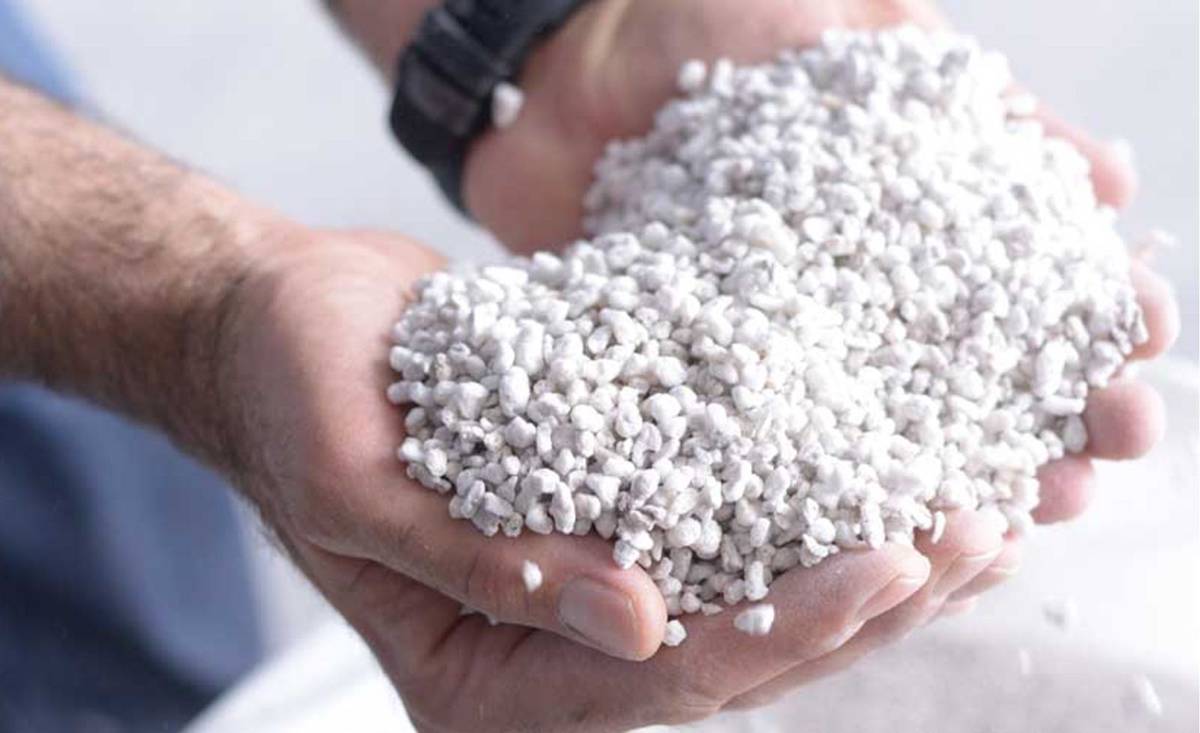
Between 32 and 240 kg/m³ depending on the degree of expansion. It cuts the weight of mortars, concretes and substrates without sacrificing volume.
Its cellular structure traps air, slowing heat and sound transfer. Used from walls and roofs through to cryogenic tanks.
It is a volcanic glass: it does not burn or add fire load, and it withstands extreme temperatures. Used in passive fire protection.
Chemically non-reactive, pH-neutral and free of pathogens. That is why it is accepted in food, beverage and pharmaceutical filtration.
| Industry | Application |
|---|---|
| Construction | Lightweight aggregate for concrete and mortar, insulating plasters, boards and panels, cavity insulation, fire protection |
| Horticulture and agriculture | Growing media and soil conditioners: aerates the root zone and holds moisture without compacting |
| Industrial filtration | Filter aid for beer, wine, juices, edible oils, syrups, water and pharmaceutical products |
| Cryogenics and industry | Insulation for liquefied gas tanks, foundry moulds, soft abrasives, absorbents |
| Consumer | Cat litter, spill absorbents, lightweight fillers |
The market
This is the figure that explains the project. The United States is the world's fourth-largest perlite producer and still runs a permanent shortfall: around 23 % of the mineral it consumes has to be bought abroad, and 94 % of those purchases cross the Atlantic from Greece.
| Item | 2021 | 2023 | 2025e |
|---|---|---|---|
| Mine production (crude ore) | 879 | 654 | 730 |
| Processed perlite sold or used | 491 | 410 | 460 |
| Imports for consumption | 170 | 140 | 160 |
| Average price (USD per tonne) | $64 | $74 | $78 |
| Net import reliance | 23 % | 23 % | 23 % |
94 %
of United States perlite imports come from Greece, and 3 % from China. They arrive by ship at east coast ports. The rest of the world supplies the remaining 3 %.
Thousand metric tonnes. Mexico does not appear among recorded producers.
Source for all market figures: U.S. Geological Survey, Mineral Commodity Summaries 2026, Perlite chapter. 2025 figures are USGS estimates. Import origin: 2021–2024 average.
Legal standing
There is no concession here that can expire.
Mexico's Mining Law sets out a closed list of substances subject to federal concession. Perlite does not appear on that list, and for that reason it belongs to the owner of the land where it lies.
Article 4. Closed list of concessible substances. Perlite is not on it.
Article 5, sections IV and V. Excludes from the Law rocks intended for construction materials and those extracted by open-pit work, which is precisely how perlite is mined.
The consequence. No concession to expire, lapse or be disputed. No third party with preferential rights. No payment for raw material: the ranch belongs to the company's shareholders.
Location and logistics
The United States imports processed crude perlite mainly from Greece, by ship, into east coast ports. Rancho Babidanchi sits on dry land, a day's truck drive from the border.
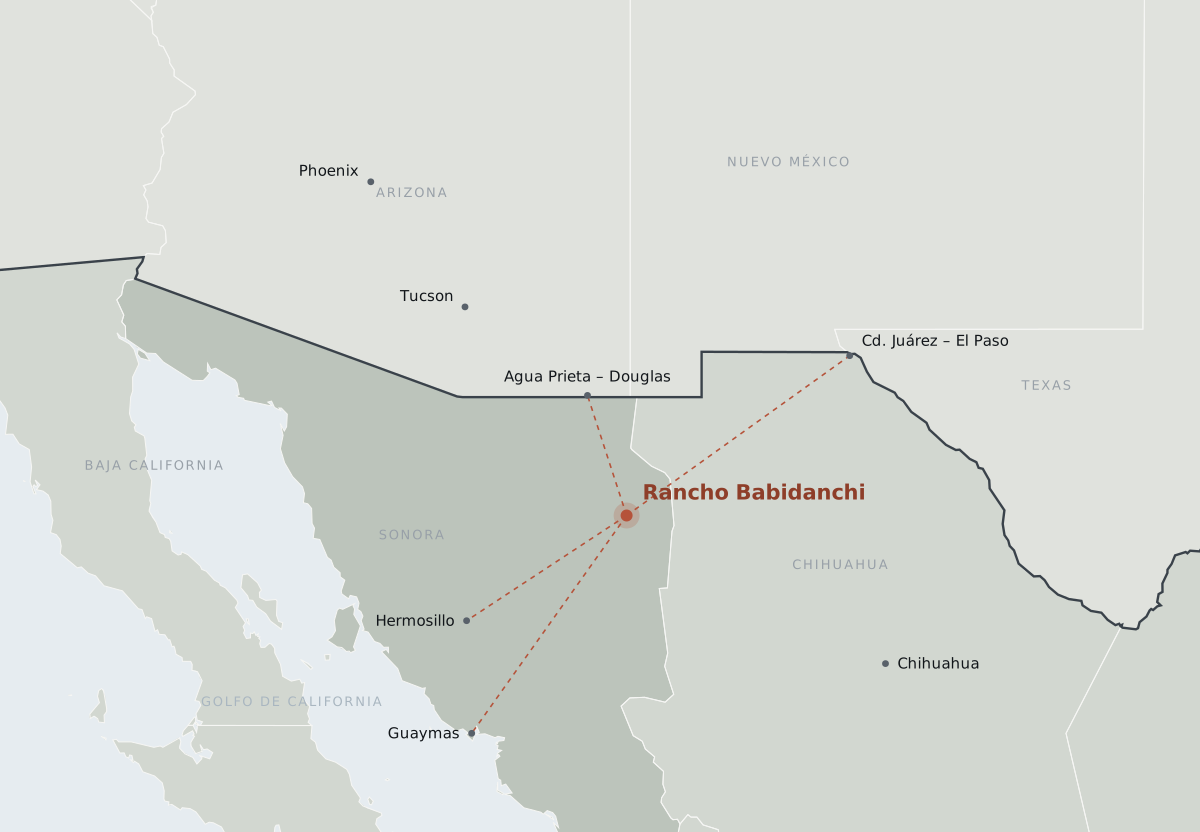
| Destination | Distance | Route |
|---|---|---|
| Agua Prieta – Douglas, Arizona border | 218 km | Highway |
| Hermosillo, Sonora | 267 km | Highway · intermodal rail link |
| Ciudad Juárez – El Paso, Texas border | 367 km | Highway · rail freight hub |
| Port of Guaymas, Sonora | 429 km | Highway · maritime outlet |
From the ranch, highways reach Douglas, Tucson and Phoenix in Arizona; and eastward El Paso, Texas, home to one of the largest rail freight hubs in the United States, with spur access for expansion plants across the southeast.
Southward, Hermosillo and the port of Guaymas open the maritime route to markets in Europe, Asia and South America, and make it possible to compete in the same import segment that Greek shipments serve today.
Access to the ranch is via ten kilometres of well-maintained dirt road from the village of Aribabi, which connects to paved highway.
The place
In the Opata language, babi means to drink and danchi to run: the place where the water runs. The name is not incidental.
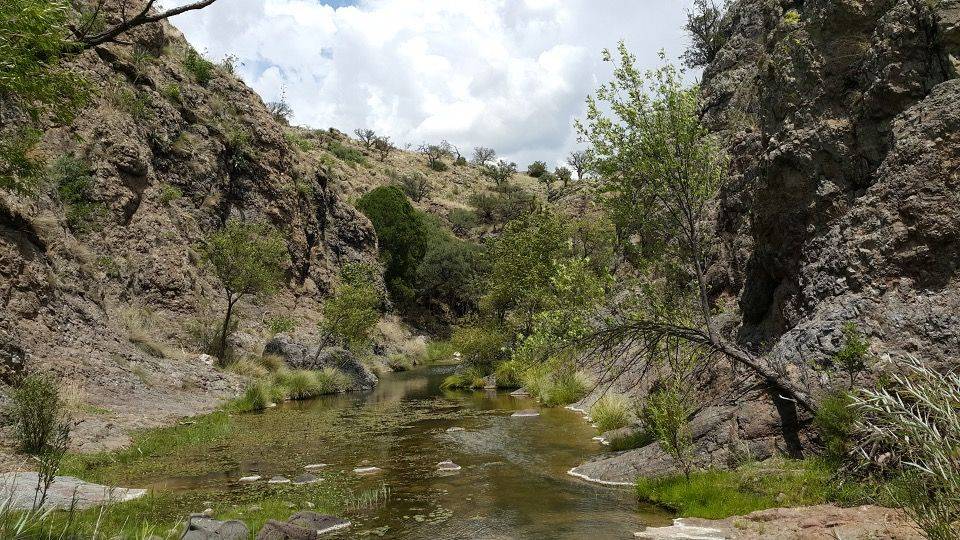
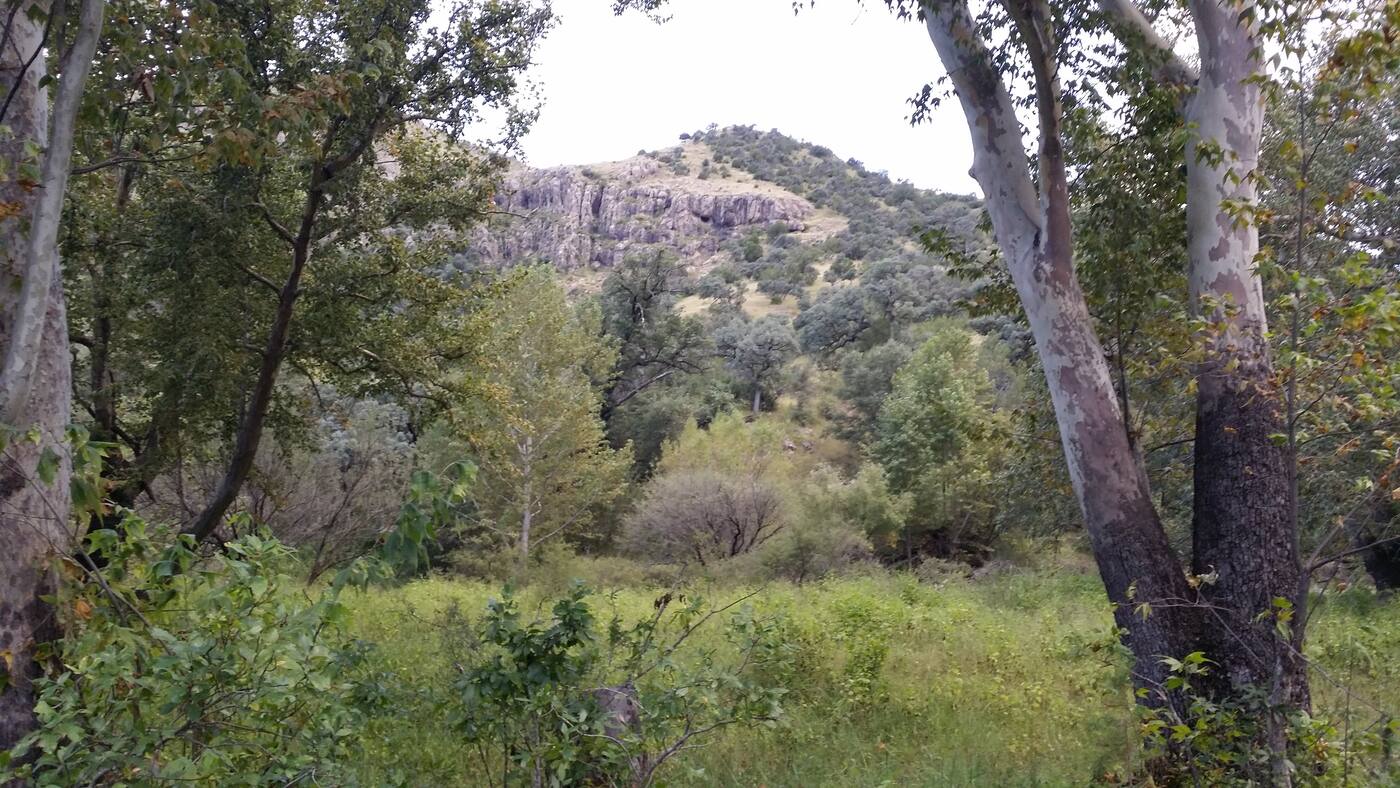
A perennial spring-fed arroyo runs through the ranch, twelve months a year. It is not a seasonal wash that dries out between rains: the canyon it carves keeps pools and riparian vegetation all year round.
The name of the property recorded this long before any study: in the Opata language, babi danchi is the place where the water runs. The toponym predates the geology, and it describes exactly what is on the ground.
For a mining project, having running water year-round inside the property itself, without hauling it in or depending on a third party, is a condition that rarely comes already settled.
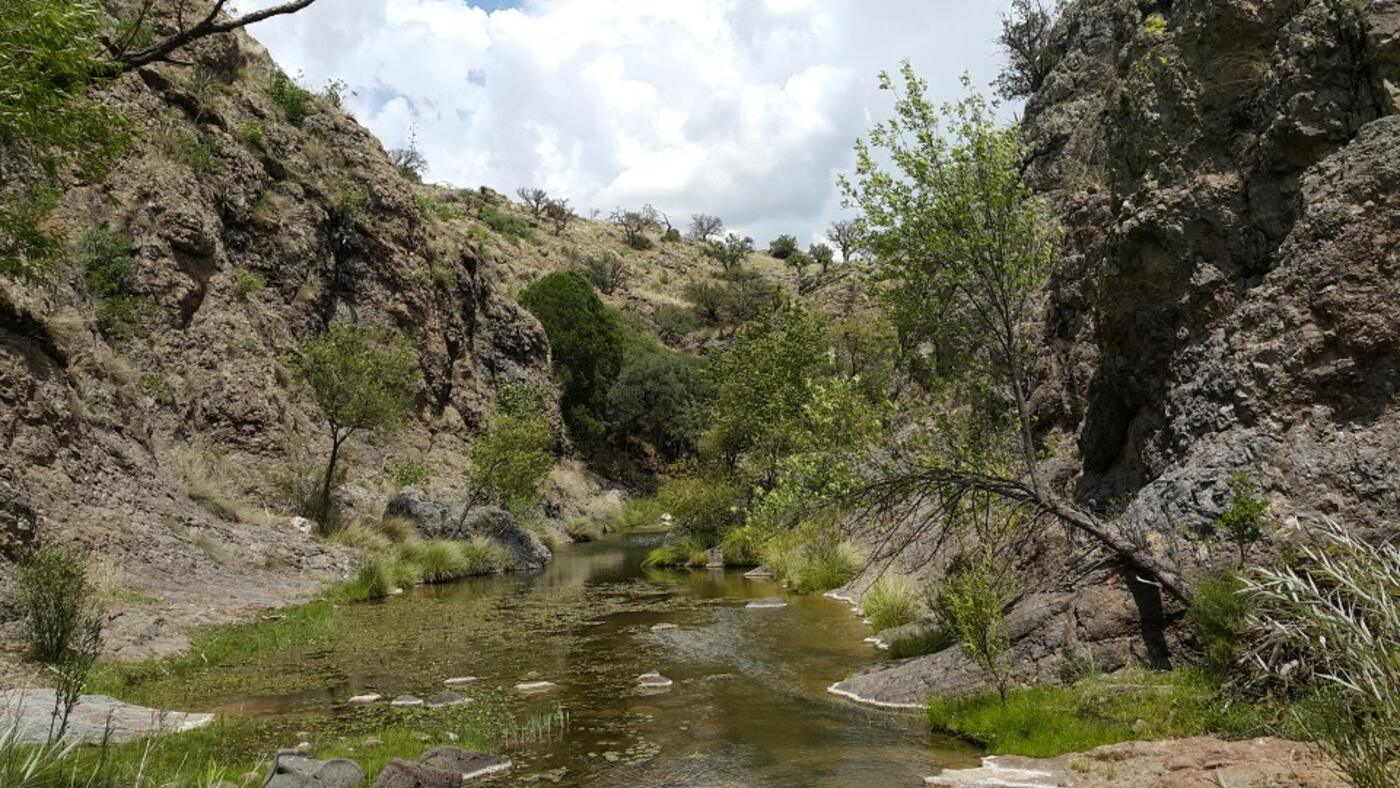
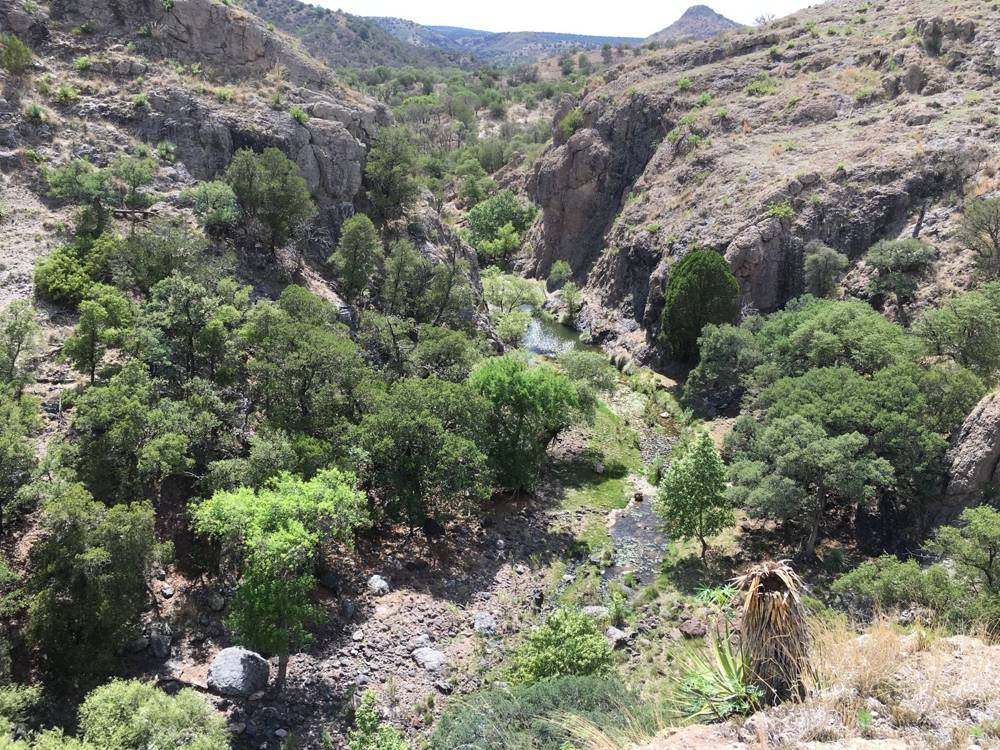
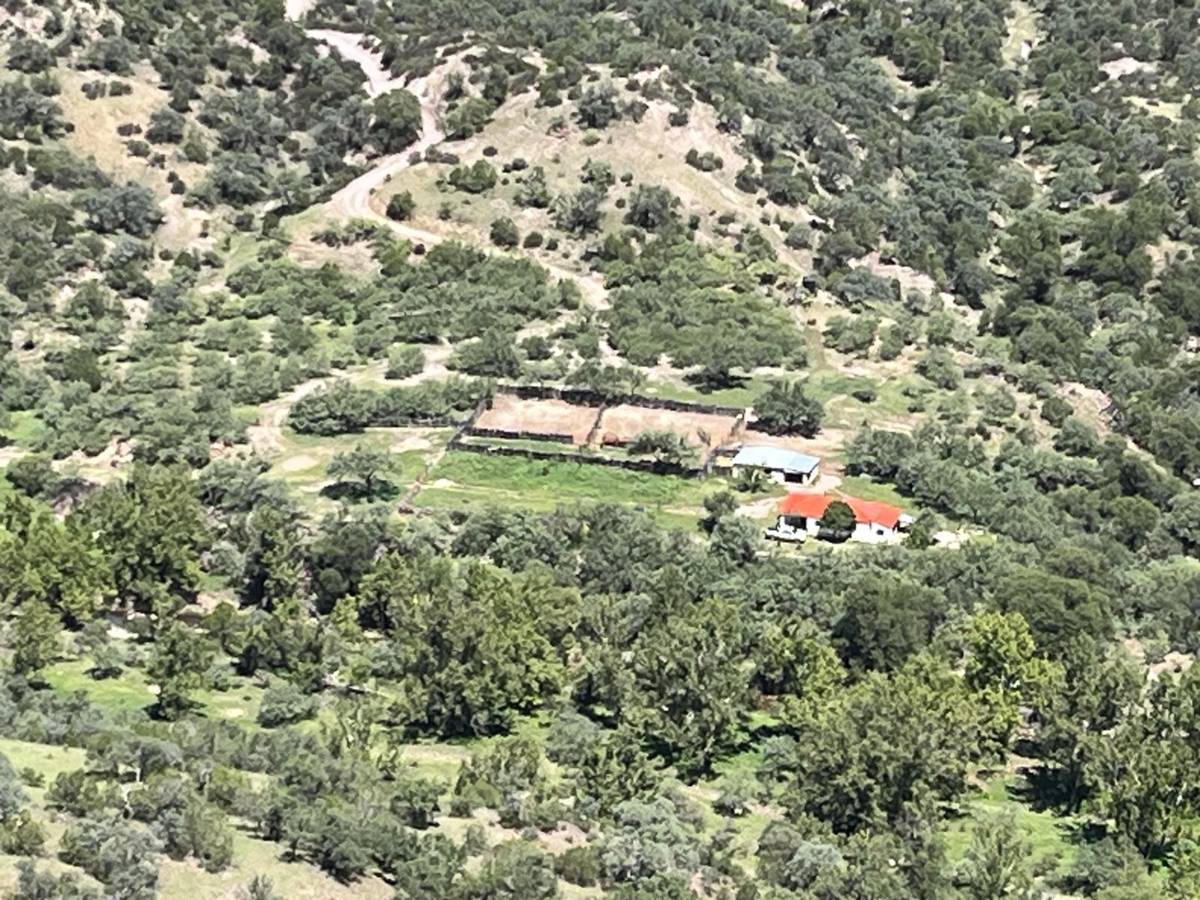
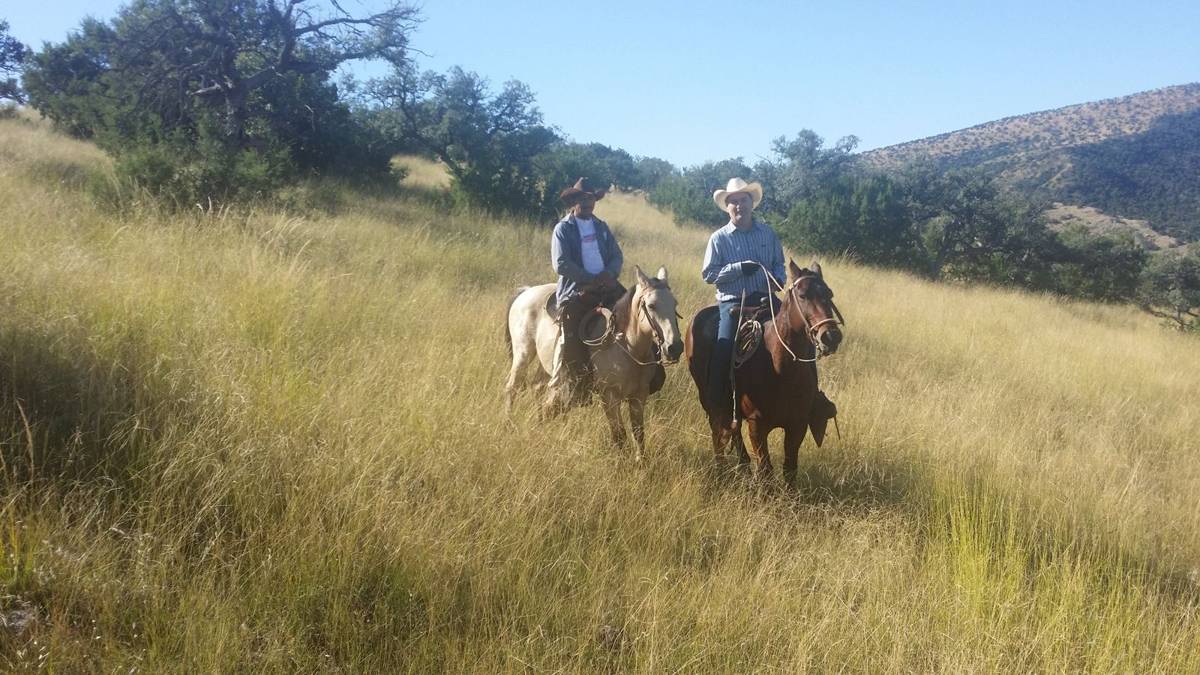
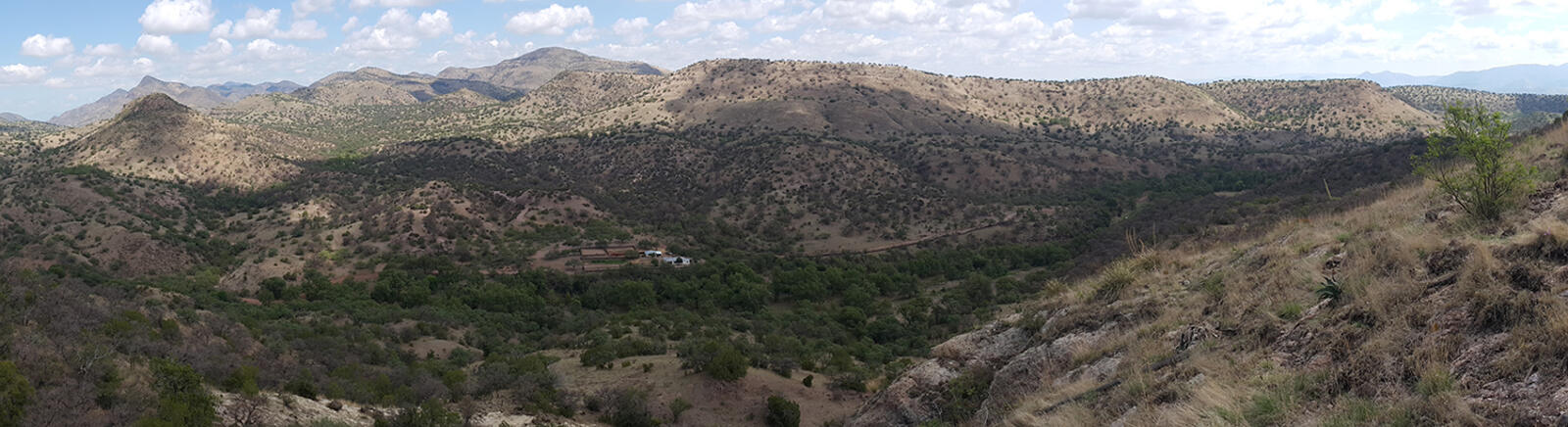
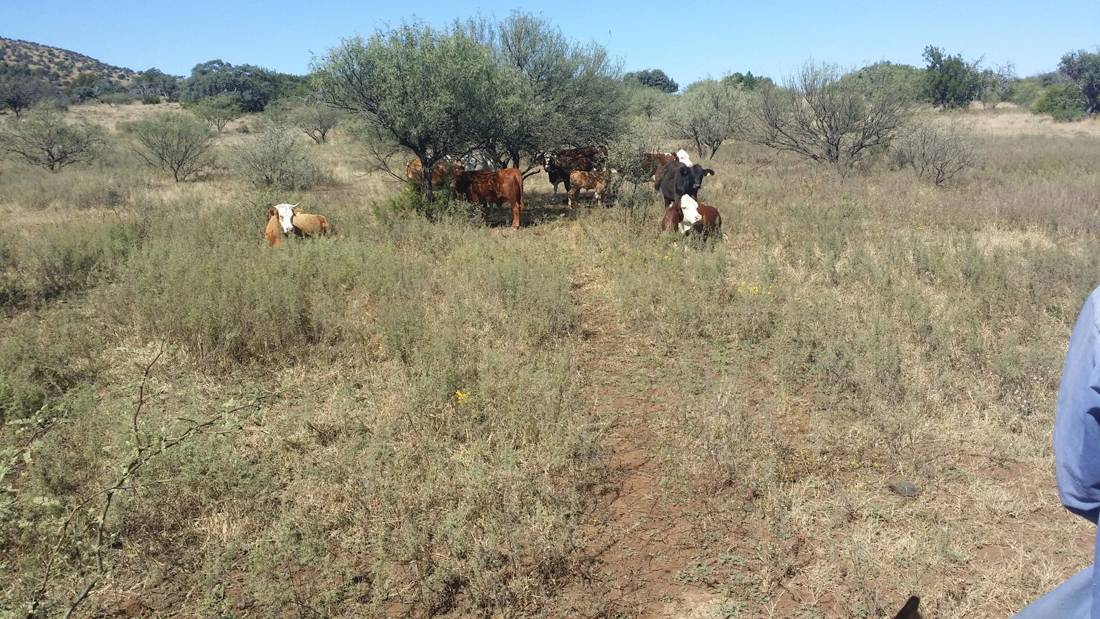
The ranch is a working cattle operation, not empty ground. A project starting here does not start from zero:
Furnished house with solar power, warehouse, corrals, yards, office, water tank and mobile phone signal.
Working internal roads and ten kilometres of well-maintained dirt road to the paved highway. A new seven-kilometre road is planned for tractor-trailer access.
The planned crushing plant site sits less than two kilometres from the deposits and seven from the paved highway.
Open pit. The ore outcrops at surface and is soft: it is ripped and loaded with a bulldozer, with no blasting and no underground work.
Personnel from Aribabi and Huachinera, returning home daily. No camp or personnel logistics costs.
The Sierra Alta region of Sonora, with a permanent National Guard presence at Bavispe and Moctezuma, 62 and 93 kilometres away.
Technical evidence
Four decades of geological work on the same deposit, plus the official document behind the legal standing of the mineral. All of them open in a new tab, to read online or download.
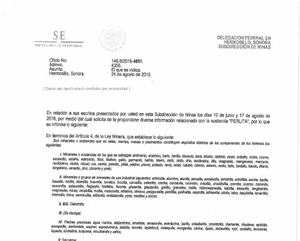
Ministry of Economy. Confirms in writing that perlite is not subject to the Mining Law. In Spanish.
PDF · 2 pages · 2016
Consultoría Geológica GV. Detailed mapping with 84 georeferenced field stations. In Spanish.
PDF · 27 pages · 2015
Consultoría Geológica GV. Five boreholes, independent topographic survey and volumetric calculation. In Spanish.
PDF · 7 pages · 2016
Vidal Solano and Hinojosa García, Universidad de Sonora. Petrography, geochemistry and the expansion testing cited on this page. In Spanish.
PDF · 114 pages · 2016
ALS Chemex de México. Eleven samples by ICP-AES and ICP-MS: major, trace and rare earth elements.
PDF · 6 pages · 2016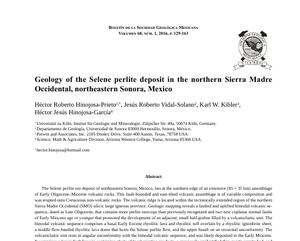
Peer-reviewed article, Boletín de la Sociedad Geológica Mexicana, volume 68. The independent academic validation. In English.
PDF · 35 pages · 2016
Undergraduate thesis by Almazán Holguín and Trelles Monge, Universidad de Sonora. The source of the dome resource estimate. In Spanish.
PDF · 86 pages · 1986
Both authors ratified in writing. Trelles Monge is certified as professional geologist No. 10304 by the American Institute of Professional Geologists.
PDF · 1 page · 1988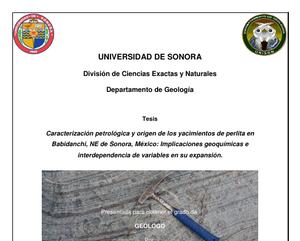
Thesis by Melgarejo Joris, Universidad de Sonora. The variables that govern the expansion of the ore. In Spanish.
PDF · 140 pages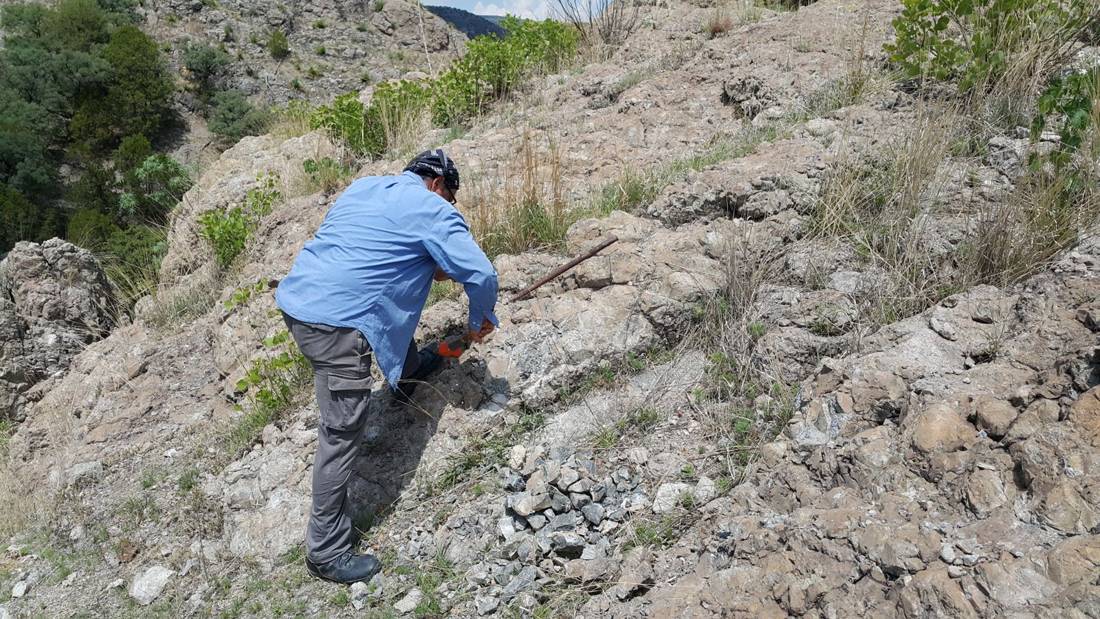
What we are looking for
Perlita Babidanchi is a family company. The asset is documented and operations will be entrusted to a professional operator. These are the three structures that best fit the project as it stands today.
The interested party funds the drilling and a resource report to international standard over an agreed term, with the right to purchase at a set price if it chooses to exercise.
It grants exclusive access to the deposit for the term, control over the exploration programme and its results, and a price known from signature, with no obligation to exercise.
A third party operates and pays a minimum annual rent plus a royalty per tonne extracted. The family retains ownership of the land and the mineral.
It is the standard structure for industrial minerals on private land in North America. Here it is signed directly with the owner: no concession stands in between and no mining-authority procedure applies to the material.
The partner brings capital and operations; the family brings the asset and keeps an equity stake, a board seat and access to financial reporting.
The partner comes in without paying to acquire the asset, and with the landowner inside the company: land access, one of the most frequent risks in Mexican mining, is settled from signature.
We also consider the sale of the complete asset or of an equity stake, and supply contracts for crude ore once in operation: we have already received letters of intent from buyers in Mexico and the United States.
Gallery
Contact
If the project interests you, write to us. We share the complete technical file — geological studies, laboratory analysis and legal documentation — under a confidentiality agreement.